

ARTICLES BY ALEX THEBERGE, MFT
How To Integrate A Psychedelic Experience
Integration is a much talked-about term among users of psychedelics these days, but I have found that for many it is still an abstract or vague concept. It can be hard to wrap one’s head around a process that is multi-dimensional and so deeply personal.
What does integration really mean in practical and tangible terms? From my experience guiding people before, during, and after intensive, week-long ayahuasca retreats, integration is the process by which the experiences that occurred during ceremony, or during a psychedelic experience, translate into actual changes in your life.
Integration is a much talked-about term among users of psychedelics these days, but I have found that for many it is still an abstract or vague concept. It can be hard to wrap one’s head around a process that is multi-dimensional and so deeply personal.

What exactly is meant by “integration” ?
What does integration really mean in practical and tangible terms? From my experience guiding people before, during, and after intensive, week-long ayahuasca retreats, integration is the process by which the experiences that occurred during ceremony, or during a psychedelic experience, translate into actual changes in your life.
Whether you had a profound mystical experience, deep lessons and new insights, a harrowing night of gripping fear, or just a lot of releasing and purging, something powerful happened and your consciousness shifted in some way. You’ve experienced a break with your ordinary understanding of reality. And as a result you’re differnt. You’ve changed, but it is not always clear exactly how or, more importantly, what that change might mean for your life.
Perhaps your worldview expanded, or your orientation towards life. Or maybe you experienced a change in your preferences, your feelings about things, or in your understanding of yourself. But the bottom line is something has unequivocally shifted.
Integration is the process of digesting that change and manifesting its fullest expression.
Anyone who has backpacked around the world or done extensive traveling knows that returning home can be a shock to the system. It can take months for you to adjust to being “back home.” You’ve had all these incredible experiences in that time and its changed you, but the life, the people, and the circumstances you’re returning to appear to be basically the same. They’ve been simply living out their regular lives. It takes time to adjust both the “new you” to your life and your life to the “new you.”
It is similar with psychedelic experiences. You’ve gone on a consciousness world-tour or experienced eternity in a night, and now you’re expected to go back to the office on Monday and make small talk with co-workers? This can be very jarring to the psyche and sometimes results in quite a bit of emotional turbulence. Making your integration process a priority will help you to smooth your experience and integrate in a more conscious and intentional manner.

What does integration look like?
There is no formula for integration because it is truly unique to the individual, their particular psychedelic experience, and their intentions. Each person has different reasons for engaging in intentional entheogenic work. For some, the focus is healing trauma or recovering from addiction. For others its about spiritual awakening and expansion. And for others its about growing and learning and experiencing the world differently. Whatever your intention is for engaging with psychedelics in the first place, will have a big impact on what your integration process looks like.
Generally, I find that integration is a gradually unfolding journey that for many people can take months to complete. For some people doing deep and ongoing plant medicine work, their entire life becomes all about integration for a couple of years. For others, particularly if they have experienced deep mystical states, it can be essentially a life-long journey. It really depends on the person and the nature of their experience.
Regardless of what your particular integration journey looks like, there are some practices I recommend that can help you make the most of your enthoegenic or plant medicine experience.

Recommended Practices
First, approach integration intentionally. If you engage with the process as an active participant, you are much more likely to realize the transformational potential of the plant medicines or psychedelics. This means really reflecting on what happened, what it means for your life, what messages and guidance were received and exploring how to put them into practice in your life.
- Give yourself time and space. If possible, do not return to your routine life right away. It can be helpful to have some time off between your entheogenic experience and your normal routine. Even a day of unscheduled time to yourself can be very helpful. Some time alone is very helpful here. Once you start talking about your experience with others, you are altering your relationship to it in some way. This is fine and normal but you will get more out of your experience if you have alone time to truly reflect on it and allow further insights to bubble up before switching to explanatory mode with friends and family.
- Spend some time in nature. Some quiet time in a natural setting, connecting to the world around you, can be very helpful. It can be helpful for grounding and stabilizing your energy. Natural settings are also good at helping put things in perspective.
- Allow yourself to learn how you’ve changed. Many people find they are drawn to different things or organically have different preferences. Your diet may change, what kind of substances you engage with can change, the kinds of people you are drawn to may change. Give yourself time to find out. Your body often knows before your conscious mind does so before engaging in your regular habitual patterns, check-in with your body and see if this still feels right for you. In some cases, you may find that it doesn’t.
- Pay attention to your intuition. After a profound psychedelic experience you may find that you are more aware of your intuition. You got out of your ordinary linear mindset for a while, which helps you to tune-in to intuitive and unconscious communication. There may be a lot of wisdom and additional insights from your intuition so pay attention. Don’t just ignore it. You may find that as you are going about your day-to-day life, certain experiences are highlighted somehow. They stick out as if something beyond conscious awareness is drawing your attention to it. Pay attention and explore these.
- Pay attention to and work actively with your dreams. Dreams are a great channel for tapping into the unlimited creativity and intuition of the unconscious mind and beyond. They are psychedelic in their own right! You may find that there is a lot of processing of the psychedelic experience that happens in your dreams. You can work with your dreams intentionally as well. Before you go to bed put some intentions into your dreams regarding your integration. If there is a lack of clarity regarding something that happened during your ceremony or psychedelic experience, ask for guidance. If you need helping grounding and balancing, ask for help with that. In the morning as soon as you wake up, try to recall your dreams and spend a little bit of time reflecting on them. Writing them down in a journal is really helpful to get the most of working with your dreams.
- Keep a journal . An integration journal can really help you to get a handle on the process and work through things as they come up. This doesn’t have to be a linear recounting of events. You can creatively express what is happening, how you are feeling, how your world is shifting. This is helpful in terms of integrating these shifts at a conscious mental level. Some people also find that artistic and musical creative expression is really helpful. This allows the non-linear aspects of your mind to process and express what’s happening as well.
- Talk to people you can trust. Verbally processing what happened with a trusted confidant can also be very helpful. But make sure its someone that is open to hearing about it and will not respond with judgment or close-mindedness. Obviously its more helpful to share your experience with other people who have gone through it.
- Start new practices. Because of the disruption of your ordinary state of consciousness, psychedelic and ceremonial experiences offer an incredible opportunity to make lasting practical and behavioral changes. There is a window of opportunity, before your brain gets back into automatic living mode, during which you can more easily institute new practices. These can be health practices, such as eating a healthier diet or starting a regular exercise practice, or be spiritual in nature, such as creating a routine for meditation, yoga, prayer, intention setting, etc.
- Throw out old practices. Similarly it is much easier to get rid of old unhealthful behaviors and practices that no longer serve you immediately after a psychedelic experience. Everything is more malleable so make changes before things start solidifying back into a regular routine.
- Get help if you need it. Integration can sometimes be turbulent. It may feel like your life has been turned upside down. If you are having trouble navigating the new you and your new world or find yourself unable to ground, reach out and get some help with what you are going through. If your ceremony or psychedelic experiences was facilitated, reach out to the facilitator for guidance. Or get help from a psychotherapist, a healer, or a spiritual teacher, ideally ones that are familiar with non-ordinary states of consciousness. There are also integration circles in some cities that are peer-facilitated meetings where people share their experiences with psychedelics. You don’t have to work through it alone.
Some Practices I Do Not Recommend
- Taking every vision you have in ceremony or in a psychedelic experience literally. It is best to treat them more like dreams in that they are providing symbols and communication that carry meaning but not necessarily the literal meaning that we think. It is best to explore these over time without attaching to your initial reaction. Often what that visionary experience means to you evolves over time. Don’t get attached to your initial reactions reached in the height of ecstasy.
- Returning home and making dramatic life changes immediately following a ceremony. Give yourself time to put the psychedelic experience in its proper place in your life. Maybe big dramatic changes are needed, but give yourself time to stabilize emotionally and energetically first. And even then, give it some time. Your understanding of what needs to happen may change over time. Give it the space to do that.
- Telling everybody you meet that they must take LSD or drink ayahuasca. This is a common impulse for people who had incredible life changing experiences. But remember, these practices aren’t for everybody. Some people have really hard times with psychedelics, even dark terrifying experiences. For others, such as those with serious psychiatric conditions, it can be dangerous. Recommending that everybody engage with psychedelics is reckless. Practice discernment in terms of who you talk about it with and how you talk about it.
In many ways the integration process is the most important part of working with plant medicines or other entheogens. It is where most of the work is done and where true transformation is manifested. To quote Jack Kornfield, after the ecstasy, the laundry.
Psychobiotics, The Future of Mental Health?
The gut microbiome has become one of the most exciting fields of medical inquiry of the last decade. Much of the research began as an effort to understand and address a variety of chronic stomach ailments that have come into popular focus over the last 25 years, conditions such as Crohn’s disease, gastroesophageal reflux disease (GERD), ulcerative colitis, and Irritable Bowel Syndrome (IBS). Psychotherapists and psychologists have long postulated a connection between psychological ailments, psychosocial stressors, and stomach disorders. For example, 61% of people with IBS also have a DSM-diagnosed anxiety disorder. The classic understanding posits that high stress levels and anxious tendencies can cause disturbances in the gastrointestinal tract, including high stomach acid levels and hyper-reactive bowels, that may lead to various GI disorders.

The gut microbiome has become one of the most exciting fields of medical inquiry of the last decade. Much of the research began as an effort to understand and address a variety of chronic stomach ailments that have come into popular focus over the last 25 years, conditions such as Crohn’s disease, gastroesophageal reflux disease (GERD), ulcerative colitis, and Irritable Bowel Syndrome (IBS). Psychotherapists and psychologists have long postulated a connection between psychological ailments, psychosocial stressors, and stomach disorders. For example, 61% of people with IBS also have a DSM-diagnosed anxiety disorder. The classic understanding posits that high stress levels and anxious tendencies can cause disturbances in the gastrointestinal tract, including high stomach acid levels and hyper-reactive bowels, that may lead to various GI disorders.
And while that is true, recent findings regarding the impact of stomach bacteria on the mind and behavior have surprised the scientific community, challenged the classical paradigm, and opened up new lines of inquiry.
The Emergence of Psychobiotics
Professor Ted Dinan of University College Cork in Ireland, one of the pioneers in the field, introduced the term psychobiotics in 2012 to describe the specific bacteria that when consumed result in beneficial effects on mood, motivation, and cognition.

A new book co-written by Professor Dinan just came out
To understand how infinitesimally small bacteria in the stomach can affect the subjective experience of depression or anxiety, we need to understand a bit about the stomach’s relationship with the brain, a relationship we still don’t fully understand, but that is the focus of increasing research globally.
The Stomach Has A Brain
To begin with, it is important to note that the stomach has its own “brain:” the enteric nervous system. Often nicknamed “the second brain,” this mesh-like network of 500 million neurons lines our entire digestive tract from the esophagus to the anus. It is responsible for co-ordinating and managing all our digestive functions and it does so with input and feedback from the brain and central nervous system, via the vagus nerve.
The Vagus Nerve
The vagus nerve is a very large bundle of nerves that runs from the brain stem to vital organs including the stomach. Scientists were astounded to discover that 90% of the nerve fibers in the vagus nerve are communicating signals from the gut to the brain in a bottom-up manner.
That’s right, this major super-highway of nerve fibers is mainly delivering information, signals, and communication from our stomach to our brain. And much of that signaling is being generated by the gut bacteria through its constant dialogue with the second brain.
The vagus nerves terminates in the brain stem but has direct neural links to a variety of brain regions that are associated with processing and regulating mood, emotions, stress, and hunger. And it is these pathways that researchers think is fundamental to how the gastrointestinal microbiome can impact, and potentially cause, anxiety and depression.
In fact, one novel therapy for treatment-resistant depression involves the ongoing electrical stimulation of the vagus nerve via a pacemaker-like implanted device.
The Gut Brain Axis
This bi-directional relationship between the brain and the GI system is called the “Gut-Brain Axis” and the star player in this relationship between the gut and the brain is our gastro-intestinal microbiome. This is the multi-billion strong community of microorganisms (bacteria, protozoa, and viruses) living in our gut that digest our food, synthesize important vitamins, and help mount immune responses to harmful pathogens we have consumed. The average human has between 3–6 pounds worth of these microorganisms in their GI tract and the evidence suggests that they evolved symbiotically with our body’s cells to provide vital functions that our cells can not. It's hard to underestimate the importance of these billions of bacteria living in our colon. Beyond their critical role in digestion they are intimately involved with our immune system, endocrine stress response system, and our central nervous system.

Making An Anxious Mouse Confident
One of the pioneering studies proving that stomach bacteria could affect behavioral responses was conducted in 2011 by Premysl Bersick at McMaster University. Bersick and his team experimented with fecal transplants (exactly what it sounds like) between mice that were genetically bred to be timid and anxious and mice genetically bred to be bold and exploratory.
Bersick showed that when the timid mice received fecal transplants from bold mice, they become less anxious and more exploratory. The reverse also held true: genetically bold mice were much more cautious and fearful after the introduction of stomach bacteria from anxious mice. Later research indicated that obese mice lost weight after receiving fecal transplants from thin mice, which has led to a novel new approach for treating obesity.

Since then, dozens of studies on mice have been conducted pinpointing the effects of specific gut bacteria on mouse behavior and neurochemistry. Mice are used due to ease of experimental study and because the primary means of isolating the effects of one strain of bacteria is by using animals that have been bred, raised, and kept in a germ-free environment. Novel stomach bacteria are introduced one a time to see the effects on the mice’s behaviors and neurochemistry and the results have been truly incredible.
The Tryptophan-Serotonin Connection
Tryptophan is an essential amino acid that we must get from food and a critical precursor for the synthesis of Serotonin. Tryptophan crosses the blood brain barrier and how much gets there is regulated by our gut microbiome. One animal study showed that the stomach microbe Bifidobacteria infantis was shown to significantly increase blood plasma tryptophan levels. The brain stores very little tryptophan and therefore needs fresh supplies daily to create Serotonin which is critical in mood regulation. It turns out that our gut bacteria have a powerful regulating effect on tryptophan levels and how much tryptophan reaches the brain.
The Role of GABA
A a 2011 study showed that genetically anxious mice fed broth with Lactobacillus rhamnosus were more exploratory and risk-taking and were less likely to give-up in a forced swim tests than the control mice. The mice fed L. rhamnosus also showed less cortisol secretion in response to stressors as well as an increase in the number of receptors for the neurotransmitter GABA. GABA is the principal inhibitory neurotransmitter and it tamps down neural activity throughout the central nervous system. It is also the target site for the anti-anxiety medication such as Xanax. When the vagus nerve of mice in this study were severed, the effect disappeared, making it clear that the the bacteria were acting through the vagus nerve to alter brain levels of GABA.
Specific strains of beneficial gut bacteria have also been shown to actually secrete GABA and recent unpublished research shows that consuming specific psychobiotics increases GABA levels in the brain, so we know that GABA is one of the neurotransmitters acted upon by the gut microbiome.
An Endogenous AntiDepressant
In the process of breaking down indigestible nutrients such as fiber, our gut flora produce short chain fatty acids that have various metabolic effects. One of these, butyrate, has been documented in several studies to have antidepressant properties. Butyrate has the ability to cross the blood brain barrier and effect central nervous system neurochemistry, including raising levels of Serotonin in the brain. And it is a key product of our intestinal microbiome because it is also used as food by the cells lining the colon.
Mediating Our Stress Hormones
Several strains of Bifidobacterium and Lactobacillus bacteria have been shown to decrease cortisol and norepinephrine levels and result in reduced anxious behaviors in animal studies and reduced self-reported anxiety in human studies. The research suggests that benefecial stomach bacteria can temper the Hypothalmus-Pituitary-Adrenal Axis that is the primary mechanism of the fight-or-flight stress response system.
Stress hormones also inhibit the immune system, which is why chronic stress creates susceptibility to infection and illness leading to chronic low-grade inflammation. This is a marker commonly seen with depressed patients.
Human Trials
While there are is a ton of experimental research on mice and a growing base of exploratory studies on humans, there is a substantial gap between the animal research findings and the clinical data on humans. We just haven’t seen the kind of rigorous randomized double-blind placebo-controlled clinical studies evaluating the effects of psychobiotics on human subjects with mental health diagnosis.
To date, there has been one study of this kind, conducted in Iran in 2016 and it indeed found significant decreases in depressive symptoms versus the control group for subjects with Major Depressive Disorder that were administered Lactobacillus acidophilus, Lactobacillus casei and Bifidobacterium bifidum for 8 weeks.
Furthermore, three recent meta-studies that examined all of the human research in the field up to now all came to the same conclusion: probiotics can lead to reductions in symptoms of depression and anxiety, improve mood and reduce stress response in humans with or without depressive or anxiety disorders.

Which Psychobiotics?
While we are still in the early stages in our understanding of psychobiotics, there are a few strains of bacteria that have demonstrated beneficial effects on mood and anxiety in both animal studies and preliminary human studies. And the good news is many of these are found in yogurt and other fermented foods. These include:
Bifidobacteria Species: B. longum, B. bifidum, B. breve, B. infantis, B. bulgaricus
Lactobacillus Species: L. helveticus, L. rhamnosus, L. plantarum, L. reuteri, L. casei, L. bulgaricus, and L. acidophilus
But before you go out and start shopping for the latest in psychobiotic supplements, keep in mind that:
- Psychobiotics need to be ingested alive and in enough quantity to survive the tortuous voyage to your lower intestines and colon. We’re talking 10–100 billion Colony Forming Units (CFUs) required.
- Psychobiotics have synergistic effects when consumed together. Therefore, it is better to consume a cocktail of known psychobiotics together versus individually.

Combinations of probiotics shown to work well together
- These bacteria take time to build-up colonies in your GI tract. This means that, similar to antidepressants, you need to consume them for a few weeks before knowing if they will have a psychological benefit. The average administration period used in human studies is around 4 weeks.
- Also similar to antidepressants, you need to keep taking them as many can’t naturally survive long-term in the gut. In various studies the beneficial effects of probiotic supplementation stopped within days once the consumption of them ceased.
The Importance of Nutrition and Prebiotics
There is actually a whole lot more you can do for your gut health than consuming psychobiotics and without these other steps, it's questionable whether psychobiotics can deliver on their potential in the first place. The message from the research is that the health and balance of your intestinal microbiome are hugely important and psychobiotics are just one tool of many.
Frankly, dietary and lifestyle changes will have a bigger impact than psychobiotics at this pont. Here are a few guidelines that many of the researchers in the field follow themselves:
- Eat Yogurt — This is the original probiotic. Make sure it has live bacteria added after pasteurization. Most “live” yogurt contains psychobiotics bacterial strains.
- Eat a variety of fermented foods such as kimchi, sauerkraut and kefir. These also naturally contain many of the psychobiotics listed above.
- Try to avoid antibiotics unless absolutely necessary. They kill off huge amounts of healthy gut bacteria.
- Eat a great diversity of high fiber plant-based foods (eg fruits and veggies). Different bacteria eat different types of fibers so just taking a fiber supplement will not increase the diversity of your gut biome, which is the key to gut health.
- Limit processed foods as much as possible. They get absorbed swiftly in the upper GI tract and stomach and starve the lower GI tract and intestines, where most of the gut microbiome resides. High-fat/low-fiber diets are known to reduce intestinal microbial diversity
- Consider the Mediterranean diet which in addition to supporting a healthy gut biome is shown to be antidepressant in nature
Gut Ecosystem Management
The general ethos for cultivating a healthy gut microbiome is to think of it as a rainforest or other complex ecosystem. The more diverse the ecosystem, the more resilient it is when exposed to pathogens. Furthermore, the more diverse your gut biome is the less likelihood of one microorganism wielding excessive influence resulting in unhealthy microbial imbalances. The best way to increase the diversity of your stomach microbiome is to eat a variety of different kinds of fiber-rich and naturally probiotic foods. Diversity of diet truly is the key to stomach health and potentially to mental and emotional health as well.
Can Ayahuasca Really Cure Depression?
There has been a lot of attention on the Amazonian plant medicine Ayahuasca over the last few years, especially for its therapeutic potential. But, frankly, there has also been a lot of hype. Statements such as “its 10 years of therapy in 1 night” get bandied about regularly. And the psychedelic press makes big proclamations like “A Single Session Of Ayahuasca Defeats Depression” when new research is released. Meanwhile, the mainstream press relishes in the ayahuasca tragedy stories or overly sensational stories about the visions or the purging. In the end it creates a cloud of misinformation and confusion about what ayahuasca is and what it can do.
There has been a lot of attention on the Amazonian plant medicine Ayahuasca over the last few years, especially for its therapeutic potential. But, frankly, there has also been a lot of hype. Statements such as “its 10 years of therapy in 1 night” get bandied about regularly. And the psychedelic press makes big proclamations like “A Single Session Of Ayahuasca Defeats Depression” when new research is released. Meanwhile, the mainstream press relishes in the ayahuasca tragedy stories or overly sensational stories about the visions or the purging. In the end it creates a cloud of misinformation and confusion about what ayahuasca is and what it can do. The truth is that while rigorous clinical trials scientifically studying the effects on humans is scant, there is a lot of evidence, anecdotally, clinically, and neurochemically, in favor of ayahuasca as an anti-depressive agent.

Working with Ayahuasca: Anecdotal Observations
Based on my own professional experience working in Peru full-time as an ayahuasca retreat facilitator, guide, and apprentice shaman for the past 2 years I can unequivocally say that I know that ayahuasca *can* cure depression. During that time, I’ve worked with and met countless people who specifically sought-out ayahuasca to treat their depression. Part of the reason is journalist Kyra Sylak's 2006 National Geographic article on her experience attending an ayahuasca retreat in the Peruvian Amazon. In it, she chronicled her dramatic recovery from depression and PTSD. That article was one of the most viewed National Geographic articles of all time and led to a lot of publicity around ayahuasca as a miracle cure for depression. Many people suffering from life-long and treatment-resistant depression came down to Peru in search of that miracle.

What I saw was that ayahuasca can indeed cure depression in some people, but it is not a panacea for everything or everyone. I worked with several guests who reported complete remission of their depression, not to mention major changes in their outlook on life and the healing of life-long traumas and emotional wounds. I also met several people who had attended their first ayahuasca retreat many years ago and reported that it literally saved their life. They were back now to work on different things or because they really enjoyed the experience. One guest told me that she was literally about to commit suicide several years ago when someone gave her the National Geographic article and it gave her enough hope to try one last remedy. These kinds of stories are not uncommon.
But there are also people who after 1 terrifying ceremony, decide that this is not for them and leave in a hurry. And there are also people who feel and look great when they finish their retreat only to return 6 months or a year later reporting a significant backslide. Most often this is due to them returning to the same depressogenic environment and not being able to make the structural life changes needed. Sometimes this is because these changes seemed too painful, daunting or traumatic to undertake (eg getting out of a relationship, quitting a job, moving, setting limits with family members, etc.) and over time the effects of, say, living in a toxic relationship, took their toll. For others, ayahuasca will clear the depression cloud that has been hanging over them but they’re going to need to do their part in terms of lifestyle changes when they get home to really liberate themselves permanently from depression. The people who, from what I’ve seen, get the most out of their ayahuasca experience do just this, using it as a springboard to make some major life changes (quitting drinking/smoking, begin meditating, improve nutrition, career changes, etc.)
But perhaps most importantly, I’ve seen ayahuasca help heal the root issues at the core of people’s depressions. Things like childhood trauma, old negative beliefs and patterns of thinking, and pervasive feelings of alienation and meaninglessness. And these are things that can take a long time to heal in traditional psychotherapy. This to me is more impressive because we are talking about more than just depression, but about changing the fundamental way people relate to themselves and their world. This is where the power in ayahuasca medicine lies and, in my opinion, the relief from depression is simply a reflection of the profound transformation occurring underneath.
What Does The Research Show?
While there are mountains of anecdotal evidence, there have only been two serious clinical studies that have been conducted examining the effects of ayahuasca on depression. In both studies depressed subjects were recruited, provided ayahuasca in a controlled setting, and followed-up with afterwards.
The first was a a small study conducted in Brazil in 2016 that examined the effects of ayahuasca on people with recurrent Major Depressive Disorder. In the study, subjects were given a one-time administration of ayahuasca in a hospital setting while seated quietly in a dimly-lit room. The study showed that the average depression score for subjects dropped from 19.2 on the HAM-D scale, a standard depression measurement questionnaire, to 7.5 at 21 days of follow-up. That is the equivalent of going from a moderate depression to full remission, so these results are pretty dramatic. However, this study only had 17 subjects and was neither blind nor placebo-controlled. It also followed subjects for only 21 days so who knows how they were doing 6 months or 1 year later. It was a promising preliminary study but definitely not the final word on ayahuasca and depression.
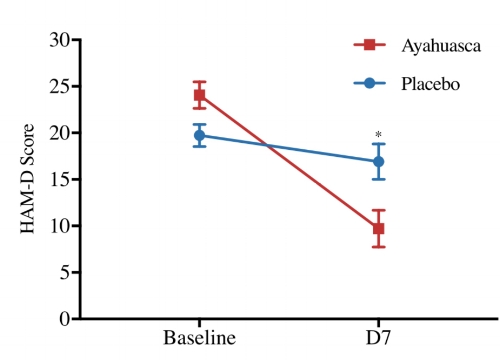
The same Brazilian team of researchers followed up a year later with a more thorough double-blind placebo controlled study of 29 subjects with treatment-resistant depression (14 in the ayahuasca and 15 in the control). This study is a big deal because it is the first double-blind placebo controlled study conducted on ayahuasca. They also showed that average HAM-D scores of the subjects administered a single dose of ayahuasca dropped from 21.8 to below 10. At the 1-week follow-up, 36% of the ayahuasca-drinking subjects were in full remission while only 8% of the control group was in remission. Again, very promising. However, clinically speaking these groups are too small to draw any definitive conclusions from. Furthermore, due to high drop-out rates, the team wasn’t able to continue the study beyond 1 week. That is a serious limitation as treatment-resistant depression is a long-term condition.
But these 2 clinical studies confirm the results of previous exploratory studies that administered ayahuasca to small groups of clinically depressant research participants. They also showed similar 50-60% declines in HAM-D scores up to 28 days later.

For comparison, the average drop in HAM-D scores in clinical trials for all FDA-approved SSRI-based anti-depressants was approximately 40%. And these were achieved with trials that explicitly excluded the very difficult treatment-resistant clients which where the focus of the ayahuasca studies. So the ayahuasca results, while preliminary are definitely promising, especially since this was after only a one-time administration of ayahuasca while current pharmaceutical treatments require weeks to build up in the body and then must be taken daily on an ongoing basis.
The Hoasca Project
Other researchers have taken the approach of studying the psychological health of long-term ayahuasca drinkers. The most famous of these non-clinical studies on ayahuasca, is the Hoasca Project, also conducted in Brazil, which administered psychological, biochemical, and physiological tests to long-term members of the Uniao do Vegetal Church in Manaus, who drink ayahuasca regularly in a religious context as a sacrament. These subjects had been drinking ayahuasca for many years, in some cases hundreds of times. Researchers compared the results of their psychological and biological tests with the results from a control group of age- and gender-matched subjects from the community. Now this was also a small study with only 30 total subjects, 15 of which were in the control. But the results revealed that most members of the UDV group had battled with alcoholism, addiction and depression prior to their participation in the ayahuasca church but none of the members currently met the criteria for a psychiatric or substance abuse diagnosis. The UDV members had experienced remission in all their psychiatric conditions, including depression, over the course of their participation with the ayahuasca church. This compares with the control group where 2 members had active psychiatric diagnosis. Other similar retrospective studies have showed essentially the same thing: long-term drinkers of ayahuasca appear to be psychologically healthier than their age/gender-matched community counter-parts and have significantly lower levels of addiction and psychiatric conditions.
Perhaps the most intriguing finding of the Hoasca Project was that the long-term ayahuasca drinkers showed significant increases in serotonin (5HT) transporters levels. Serotonin transporters are intimately related to the regulation of serotonin levels in the brain and are the target site for SSRI-based anti-depressants, so this finding showed one potential pathway by which ayahuasca can treat depression.

Ayahuasca: A complex brew
Ayahuasca is not one individual plant but a combination of plants cooked together to create a drinkable brew. The two primary ingredients are the vine ayahuasca (Banisterias Caapi) and the leaves of the chacruna plant (Psychotria Viridis), although ayahuasqueros will often include many other medicinal plants in their cook or use analogs in lieu of chacruna. Each of these two primary ingredients has their own antidepressant compounds. For example, the ayahuasca vine contains a variety of psychoactive alkaloids known as beta-harmalines that are inhibitors of the Monoamine Oxidase (MAO) enzyme. MAO inhibitors were the first anti-depressants ever developed and the Harmine in ayahuasca is a powerful one. Studies of rats administered with Harmine show a variety of anti-depressant and anti-anxiety like effects and increases in BDNF, which is a protein that supports the growth and function of neurons.
The chacruna plant contains significant quantities of Dimethyltryptamine (DMT), which is the compound responsible for the visual and visionary experience associated with ayahuasca. DMT strongly affects a variety of Serotonin receptors in the brain as they are very close cousins. One of the serotonin receptors that DMT activates is known as 5HT-2A. This is an important receptor for a lot of psychedelics/entheogens and is considered by some to be a primary neurochemical pathway for psychedelic/visionary experiences. And studies show that harmine also binds to the 5HT-2A receptor, so ayahuasca may be delivering a double dose of serotonin activation at the 2A receptor.
Recent studies show that some of the very medications psychiatrists prescribe to supplement traditional anti-depressants when they aren’t effective are major 5HT-2A receptor agonists. So we know that targeting 5HT-2A receptors can have anti-depressant properties, especially for those with intractable treatment-resistant depression.

Powerful anti-depressant compounds, but what else?
At a minimum, ayahuasca contains two very powerful psychoactive compound that have anti-depressant effects. But how can they lessen depression in one session while traditional anti-depressant medications targeting the same neurochemistry take weeks? This is still a mystery. But even the reductionist scientific understanding of ayahuasca shows that there may be more going on than serotonin receptor activation. For example, there is neuro-imaging evidence showing that ayahuasca causes marked reductions in activity and disruptions in connectivity in a network in the brain that is known to be over-active in people with depression.
My personal opinion is that the scientific understanding barely scratches the surface. A ceremonial ayahuasca experience includes a variety of ingredients (the individual, the setting, the peers and community, the shaman/facilitator, the specific constituents of the brew, the beliefs and understandings of how it works by the user, the spiritual nature of the experience for many, the physical purging that is a big part of the experience, etc.) and almost none of them have been examined scientifically. For example, only relatively recently have researchers discovered that psychedelic-caused mystical experiences can themselves have beneficial effects on mood, outlook, and personality.
Frankly, the scientific method does not lend itself well to examining such subjective experiences but that doesn’t mean that we can’t learn from the fruits of of that framework. However, it does mean that in many ways the scientific understanding is way behind the traditional Amazonian knowledge and wisdom that has been accumulated over hundreds of years and passed down from teacher to student. These traditions don’t have a western scientific theory for how Ayahuasca works, but they have tremendous practical knowledge and wisdom on how to wield ayahuasca effectively for maximum benefit.
The Power of Exercise for Mental Clarity and Emotional Stability
Most people look at exercise as a something you do solely for your body. Specifically, many people look at exercising as simply a calorie destruction mechanism to be engaged in so that that they don’t get fat. Much of our current attitude around exercise comes from 1980s fitness concepts such as the the carlorie-in/calorie-out complex. Doing something to avoid something else is usually a very poor motivator for humans. As a result exercise often falls into the basket of “things I should do” that while enthusiastically embraced right around New Years, eventually ends up being discarded by the time spring cleaning rolls around.

Most people look at exercise as a something you do solely for your body. Specifically, many people look at exercising as simply a calorie destruction mechanism to be engaged in so that that they don’t get fat. Much of our current attitude around exercise comes from 1980s fitness concepts such as the the carlorie-in/calorie-out complex. Doing something to avoid something else is usually a very poor motivator for humans. As a result exercise often falls into the basket of “things I should do” that while enthusiastically embraced right around New Years, eventually ends up being discarded by the time spring cleaning rolls around.
But vigorous exercise isn’t just about your body. Its one of the most emotionally beneficial and mentally constructive activities we can engage in. It generates mental clarity, creative thinking, flow states, and releases a powerful cocktail of painkillers, mood regulators, and stimulants. These are endogenous versions of all the drugs that people turn to recreationally or for numbing, coping, and self-soothing. Biochemically its like smoking a joint, snorting cocaine, shooting heroine and popping some Prosac all at the same time. The difference is that neurochemicals are brilliantly generated by your body in just the right balanced amount to give you all the benefits without the compulsive dopamine-reward-system hijacking associated with addictions or the crash afterwards. No wonder it is such an effective intervention for substance abuse and addictions.

Improved mood, stress, and cognitive function
More important, it is a powerful mood stabilizer. That’s right, exercise combats depression and anxiety and stabilizes mood. In fact many studies show that it is at least as effective as prescription anti-depressants. And there is a ton of research that support this. It’s the same with stress reduction. Studies show that regular exercise reduces the effects of acute and chronic stress. And the benefits are seen after a single bout of exercise. Its not like anti-depressants where it takes weeks to build up in your system to have an effect. These benefits accrue instantly. Anything that combats addiction, stress, and depression is something that the whole country should be paying attention to since all 3 are at record levels. Finally, there is evidence showing that cognitive and executive function is improved immediately following vigorous exercise. Who doesn’t want quicker, clearer and more creative thinking and improved decision making before they start their work day? And regular exercise prevents cognitive decline over-time. Its even being used as an intervention to treat age-related cognitive decline and dementia.
Approximately 30 minutes with a heart-rate approaching 60–80% of maximum heart-rate has been shown to be the ideal range
Best of all, exercise doesn’t cost anything, doesn’t require special gear, and can be done anywhere. The incredible amount of research done on exercise has even helped us to dial in the ideal amount needed for wellbeing and mood support. Approximately 30 minutes with a heart-rate approaching 60–80% of maximum heart-rate has been shown to be the ideal range. But personally, I think you can ditch the heart-rate monitor and test it out for yourself. There is an intensity level and duration at which your mind starts to feel clear, your mood lifts, and you feel excited about, well, everything. Colors look brighter, trees look more interesting and you just feel good. That is the sweet spot. It doesn’t mean you’re going to feel that way every single time but that is roughly the intensity-druation zone you are looking for. You can go beyond that, but its not necessary unless you have some physical goals (cardiovascular training, weight loss, etc.) that you are going for.

Make It Green If You Can
One thing you can do to improve the mood and stress-reduction benefits of your exercise routine is to do it in some kind of green or natural environment. I know not everyone has access to this, especially in a city, but running in a park, forest, mountain, or any green environment has been shown to improve the mood effects of exercise. Now the studies have been small but they are supported by the ample evidence base on the mood and stress benefits (not to mention, immune system, heart rage, and blood pressure benefits) of spending time in nature. Japan has been the leader in researching and promoting what is known there as Shinrin-Yoku or “forest bathing.” Its even integrated into their medical system. But fret not if you can’t find a nice forest to go run in. Even cycling in front of a computer screen video of a forest showed better mood results than watching an entertainment video.
Making The Time
So make the time in the morning. Why morning? First, you are much more likely to get it done if you do it first thing in the morning, before the day’s commitments, stresses, workloads and procrastination take over. Your will to exercise isn’t yet taxed by the demands of the day. Second, why wouldn’t you want these benefits to accrue all day long? When you exercise in the morning, all the cognitive, stress, and mood benefits carry forward throughout your whole day (to different extents)*.
Its pretty easy to squeeze in a 20 minute jog first thing when you wake-up if you lay your running clothes out the night before. Try it. If you haven’t exercised in a while, make it a walk around the block the first day. Then work you way up to a 20 minute walk and then switch to a light jog. Keep working your way up until you’ve reached your sweet spot. And it doesn’t have to be running, which is notoriously high-impact and probably not great to do every single day. Get a jump-rope and do some jump roping. Go for a bike ride or a swim if you have the time and the facilities. Do push-ups, crunches, and burpees at home for 15 minutes. Follow a video-based at-home exercise routine. There are so many ways to move your body and raise your heart-rate for 20–30 minutes. And you can alternate them for variety and to balance your body’s movements.
But do something. Your mind, your heart, and your body will thank you. And trust me, your future you will thank you down the road as well. Keep this up in your life and you may find that it is the best investment you ever made.
(*) NYU Center for Neural Science even assembled this handy little chart showing the cognitive, emotional, and physiological benefits of exercise at various intensity levels/durations as well as which physiological systems benefit and for how long.

Why You Need A Media Cleanse
Many people I know are freaked out on a regular basis these days. And can you blame them? We’ve got Climate Change, Trump Tweets, North Korea, ISIS, Brexit, mass shootings, sex scandals, hurricanes, fires, and earthquakes… oh my! Its almost as if the entire world is completely falling apart! Except it most certainly is not. While all of these things are real, marinating in the juices of all the world’s “problems” isn’t helpful or functional. In fact, it’s quite the contrary.
Many people I know are freaked out on a regular basis these days. And can you blame them? We’ve got Climate Change, Trump Tweets, North Korea, ISIS, Brexit, mass shootings, sex scandals, hurricanes, fires, and earthquakes… oh my! Its almost as if the entire world is completely falling apart! Except it most certainly is not. While all of these things are real, marinating in the juices of all the world’s “problems” isn’t helpful or functional. In fact, it’s quite the contrary. Since there is nothing any particular individual can do to solve them, being bombarded with these issues 24 hours a day isn’t functional. In fact, it’s a great way to develop what behavioral psychology refers to as “learned helplessness,”a known pathway for depression and anxiety. Is it no wonder that 17% of American adults are taking a prescription psychiatric medication? And let’s not forget that 20% of Americans are taking some kind of prescription opiate painkiller. Excluding the overlap between those two groups, you have nearly 40% of the population taking some kind of prescription medication for pain, unhappiness, or stress.

Ok so there’s a lot of problems in the world and we’re all depressed about them. Well, yes, but that’s not the real story. After all, you can pick any point in human history and find a war, an atrocity, or a natural disaster happening somewhere. Pick any time and any continent and I can pretty much guarantee there was some group of humans fighting with another group of humans in a not very nice way as well as a natural disaster befalling some tribe or civilization somewhere. My point is, this is nothing new. What is new is that we are now constantly notified about and attuned to every disaster and calamity occurring around the world practically 24 hours a day. Obviously the internet and our smartphojnes are part of the problem, but frankly, I think that’s an easy scape-goat for a much more systemic dynamic.
Because there are both political and economic reasons for this as well. And the big one is, you guessed it, money. Our modern American economy is fundamentally based on consumption. 70% of our GDP is made up of consumer expenditures on products or services. So the system we have in place, and its large actors, depend heavily on our consumption for its survival. Consumerism is the core of the American economy engine. And that engine needs constantly increasing fuel. If we as consumers fail to grow our consumption year over year by at least 1%, the economy literally falls into a recession. So there is a lot riding on keeping us consuming.
Remember when smoking was glamorous and sexy?
Several decades ago, before we became a consumer-dominated economy, the burgeoning public relations-advertising-media industry realized that you could prime this consumption by identifying archetypal human needs and positioning consumer products as solutions to these needs. Edward Bernays is widely considered to be the father of this kind of psychological manipulation due to his famous 1929 “Torches of Freedom” campaign that successfully turned smoking cigarettes into a glamorous statement of feminine power and independence. Much of the understanding that underpinned these kind of psychologically manipulative strategies was based in Freudian psychoanalytic theory. Advertisers began consulting with psychologists and psychiatrists to help peer inside the mind of consumers. They didn’t do this because they were curious, they did it because it helped them to get consumers to buy more of their products. And they’ve been doing this ever since.
Over time the marketing industrial complex has refined and developed these methods, using the latest psychological research tools to position every conceivable product and service in a way that stimulates some of our core human drives and pushes us to make that purchase. More recently they’ve been using neuroscience research and methodologies to improve advertising outcomes. This has actually become a thing. Its called “neuromarketing” and its currently very hot in advertising. The point is that these are very sophisticated operators spending literally $10s of billions of dollars a yearwith the sole intent of getting you to buy more stuff.
And the primary way they do that is buy stimulating the drives of comfort, and safety, on one hand, and stimulation, excitement and glamor (e.g. sex) on the other. In one form or another, they are essentially offering to solve the twin existential dilemmas of human existence, fear and boredom. One could easily say, borrowing from the street drug vocabulary, advertisers are selling both “uppers” and “downers”. And they are doing this by anchoring a product or service to one of the aforementioned human drives.
Our traditional media industry, television, cable TV, radio and print media, operate off these principles as well. Their main job is to sell advertising using content that will attract people and get their attention. It didn’t take long for the media industry to realize that scandal and fear-mongering are excellent ways to attract attention, beginning with the Yellow Journalism of William Hearst. So years before the invetion of the news ticker at the bottom of the TV screen, the news was skewed towards negativity and fear-mongering. Obviously our media landscape is much more complex nowadays, but you can see how pretty much every newspaper, TV/Cable channel or digital media property reallies heavily on news that is controversial or stimulates fear, anger, and outrage, or excites and titlitates us with sex, drama, and gossip.
But wait, it gets better! Now we have Google, Facebook, Twitter and Social Media. 90% of their business revenues come from selling these very advertisements. Ignore their platitudes and mission statements about “Doing No Evil” and “Connecting the World.” They are media businesses whose primary role is to sell advertising. To do so, they use every trick at their disposal to get you to be glued to your phone looking at their advertisements. Why is it that “trending” topics are often salacious and outrageous? They may seem to be crowd-chosen, which in one sense they are, but behind the scenes they are carefully cultivated click-bait, designed, enabled, and promoted to get you to keep consuming more advertisements. And they’ve gotten really really good at this. The tricks have filtered down from corporate entities to every day bloggers, and social media content creators. These buttons are being pushed all the time. I mean just look at the title I chose for this article! Designed to grab your attention!
The End-Goal of All Advertising Is Purchasing
So many people I know tell me they don’t have a TV or don’t watch TV but they carry around a personalized advertising delivery device everywhere they go. The push-based notification system on these devices make them powerful attention magnets. People walk around being bombarded by content that is designed to get them to consume more content (and therefore advertisements) or create more content (and therefore advertisements) with the end goal of getting consumers to purchase what is advertised. After all, the end-goal of all advertising is purchasing. If Google or Facebook can’t actually deliver purchases and consumption, then they fail at their job and their business fails. So in a way, these websites are in the consumption-promotion business. And they are very good at it.
The Hedonic Treadmill On Steroids
The Hedonic Treadmill is a philosophical concept that describes how seeking pleasures and comforts is a self-reinforcing feedback loop because once the pleasure is experienced, it dissipates, and we quickly return to our previous baseline state. With advertising, you can stimulate this pleasure seeking again and again because it will never lead to long-term satisfaction. It is the perfect consumption-generation system.
“A true saying it is, Desire hath no rest, is infinite in itself, endless, and as one calls it, a perpetual rack, or horse-mill.” Robert Burton, 1621
And Robert Burton didn’t have access to super models, pornagraphy, designer opiates, Facebook “Likes”, and 1,200 calorie slices of cheesecake. Companies have crearted incredibly concentrated and pleasurable versions of what naturally activate the pleasure/reward feelings in moderate amounts (eg food, sex, social approval) and at these highly concentrated versions are very hard to ignore. And in some ways they are addictive, which makes them the perfect products.
So advertising’s goal is to keep consumers on the treadmill and that consumption of goods/services they are promoting become the object of this seeking. They do this by promising pleasure, comfort, and happines by linking their products to those feeling states, or absence of those products to absence of those feeling states. They also do this by inventing and promoting products that are insanely pleasurable or palatable.
But this is only half the equation. Yes we are wired for hedonism but you can prime the pump of that treadmill a lot more by chronically triggering our stress response system (e.g. the Hypothalamus-Pituitary-Adrenal axis.). How is this done? Well if an animal is kept in a chronic state of stress, it is well documented that it will seek out food, drugs, and other comforts in laboratory settings. The same thing happens to people. As the news, media and political system promote crisis and fear as a means to capture attention and shape a compelling self-serving narrative, we get bombarded with fear and stress-inducing messages. This is a very very powerful neurochemical recipe that makes us more likely to crave and consume what is advertised to us. If you find yourself battling cravings for anything, check your stress levels first.
The Neurochemical Seesaw
I’m not saying this is some kind of co-ordinated conspiracy, but regardless of the reasons, the net effect is a neuro-chemical seesaw in which we bounce between anxiety/stress/crisis and avoidance/distraction/numbing with empty pleasures. Neurochemistry-wise, the news and media primes the Hipothalmic-Pituitary-Adrenal axis with cortisol-releasing messages and consumer advertisements promise us relief with dopamine and endorphin-releasing experiences if we simply purchase the new mattress, gadget, latest superfood, etc.
In many ways our neurochemistry is a map of and reflects the world around us. Our disturbed neurochemistry (eg chronic depression, anxiety, and addiction) makes a lot of sense when you see how dysfunctional our media and economic landscape is…and I’m not even touching on our political environment or spiritual state.
So I’ve laid out why things feel so shitty right now. Now here is where I sell you my product or service to solve just that problem! Just kidding, here is where I outline things that you can do to get out of this cycle that don’t involve a monetary transaction. I propose that tuning this stuff out will help restore sanity and that this will do more good and lead to more focused and appropriate action and citizens better prepared to do something about our collective dysfunction rather than simply being caught-up on the latest world-wide atrocities.
So, what to do:
1) Turn off and tune out.
- Eliminate all forms of advertising. This means ad-blockers on your phone and computer, fast-forward or mute TV, Youtube, and Podcast-based advertising. Be vigilant with what messaging you allow in your space. You basically want to get to Ad Zero. Support publishers by subscribing to their add-free content (ahem Medium). Its a win-win because the ad rates are a race to the bottom for the publishers and the advertsing itself is a race to the bottom for the viewer/reader.
- Stop watching/reading the news. Check in once a week if needed. Really, if there is anything that you must know it will get to you. I promise. If that seems too daunting, restrict your news to narrow segments that you are interested in. Do you need to be fed photos of a bombing in Libya when you’re simply looking for the Giants score? Get rid of Google News and pick a handful of news sources that are narrowly focused on your interests. Use RSS feeds to follow only the publications/authors/topics that are relevant to you. Narrowcast! Don’t let the media broadcast to you every piece of attrocity going on around the world. Remember its in their interest to do this but it is definitely not in yours.
- Delete the Facebook app from your phone. Seriously. Get rid of it. You can always check from your computer and much less likely to do so compulsively. If you need the messenging function for communication, just keep FB Messenger on your phone. If you are a Twitter junkie, do the same. I would say the same for Instagram and Snapchat, but I know that is a social death sentence for certain demographics.
- Turn off all phone-based notifications if they aren’t personal communications from actual human acquaintances (i.e. except txt, phone, or personal email messages). This alone will make a big difference in your concentration, focus, and clarity. Don’t let the technology make the decision for you. Just because every app encourages push notifications doesn’t mean you have to accept them. Take charge and cut out the notifications for the truly important things like personal or work communication.
2) Take action on things that matter
- Volunteer with or join a cause/community group addressing issues that you are passionate about. If the news of the day is bumming you out, join a group and actively participate in the solution (don’t just send in a donation, it’s not the same thing.) There are groups in every major city addressing political issues, economic issues, social justice issues, poverty, homelessness, you name it.
- Do things that actually are shown to relax your stress response, such as exercise, yoga, meditation, walking in nature. You may notice most of these involve your body, not your mind. Give your mind a break and do something with your body. They both will thank you.
- Take a class or workshop of some kind. Learn something new that will help you or the world in some way. Yes, you have time for it.
3) Connect to real people, real things.
- Meet a friend in person. Have an actual phone conversation with a loved one you don’t see very often.
- Make time for physical intimacy and connection. This can be with a lover, a dog, or even a massage. Physical contact is an important human need and is different than sexual needs.
- Plug in to a community group with shared interests. The key is that you be in-person connceting to actual live humans. (see step 2)
- Spend some time in nature. Leave the phone at home. Connect to the forest, the ocean, or the mountains. The natural world offers mircaulous benefits in terms of stress reduction. We are evolved to feel at home in nature. Our genes crave it.
This combination reverses the learned helplessness, puts you in the driver’s seat of content, messaging, and programming that you are exposing yourself to, and helps you to meet the core needs of connectedness that are much more satisfying, life-affirming and longer-lasting than compulsive consumption-based endorphin and dopamine seeking.